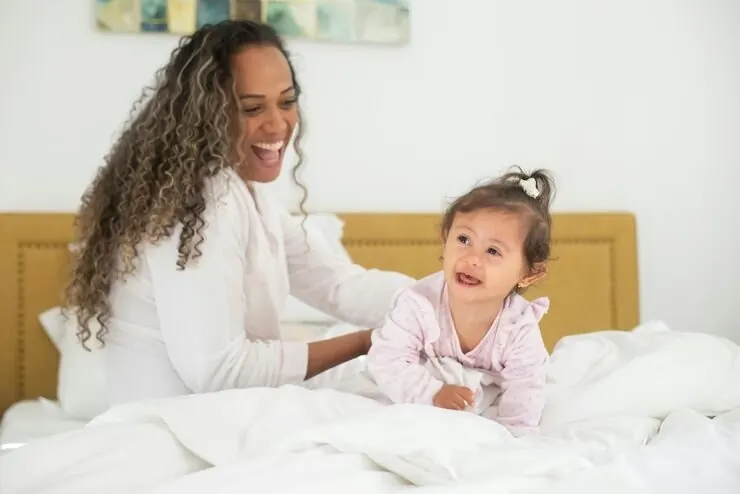
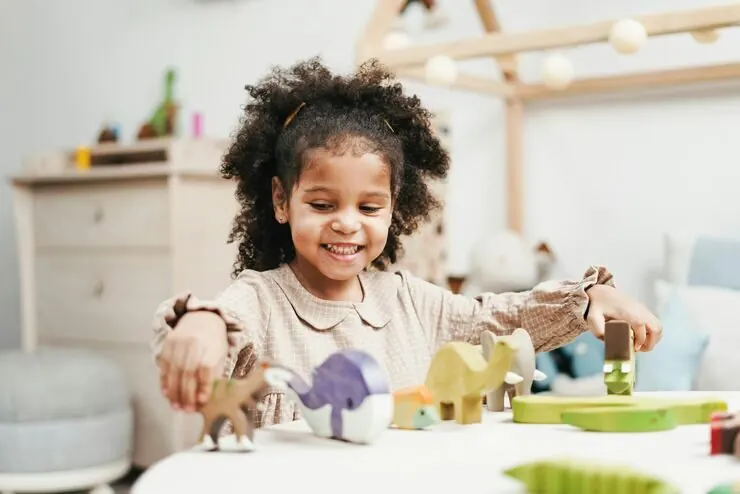
Most families who hire a multilingual nanny do so with a vague sense that it would be nice for their child to pick up another language. What they rarely appreciate is just how profound the impact can be. The window for effortless language acquisition is brief, the cognitive benefits extend far beyond vocabulary, and the way you structure that exposure matters enormously. This is not a bonus feature of a good nanny. For many families, it is one of the most consequential decisions they will make in the first years of their child's life.
The Science of Early Language Acquisition
The human brain is uniquely primed for language learning during the first years of life. Neuroscientists refer to this as the critical period hypothesis, and while the exact boundaries are debated, the broad principle is well established: children who are consistently exposed to a language before the age of seven develop native-level proficiency with an ease that older learners simply cannot replicate.
The reasons are neurological. In infancy and early childhood, the brain produces an extraordinary surplus of neural connections, a process called synaptogenesis. Between birth and age three, a child's brain forms roughly one million new neural connections every second. During this period, the brain is not just learning language. It is physically wiring itself around the sounds, rhythms, and grammatical structures it hears most frequently.
By around six months, an infant can distinguish every phonetic sound in every human language. By twelve months, that ability has narrowed to the sounds of the languages they hear regularly. This is not a loss. It is specialisation. The brain is pruning unused pathways and strengthening the ones that are relevant to the child's linguistic environment. If a second or third language is present during this window, those neural pathways are preserved and reinforced rather than discarded.
A child who hears two languages regularly in the first three years of life is not learning twice as much. Their brain is organising itself differently, building a more flexible architecture for all future learning.
After the age of seven, and particularly after puberty, the brain's approach to language shifts fundamentally. Later learners rely on declarative memory, consciously memorising vocabulary and rules, while early bilinguals process language through procedural memory, the same system that governs walking and riding a bicycle. This is why early bilinguals can switch languages mid-sentence without effort, while adults who learned a second language in school must actively translate in their heads.
The Benefits Extend Far Beyond Language
When parents think about bilingual childcare, they typically imagine their child being able to speak French or Mandarin. But the research on early bilingualism reveals benefits that go well beyond the ability to order coffee in another country.
Enhanced Executive Function
Bilingual children consistently outperform monolinguals on tasks that measure executive function, the set of mental skills that includes working memory, flexible thinking, and self-control. This is because managing two languages requires the brain to constantly monitor, select, and suppress competing information. Every time a bilingual child chooses the right word in the right language, they are exercising the same cognitive muscles used for problem-solving, planning, and focusing attention.
Studies conducted at York University and other institutions have shown that bilingual children demonstrate superior performance on tasks requiring them to sort objects by changing rules, ignore misleading information, and hold multiple pieces of information in mind simultaneously. These advantages appear as early as age three and persist into adulthood.
Cognitive Flexibility and Creativity
Growing up with two languages also appears to foster greater cognitive flexibility. Bilingual children tend to be better at seeing problems from multiple perspectives, finding creative solutions, and adapting to new or unexpected situations. They are more comfortable with ambiguity, perhaps because they have spent their entire lives navigating the fact that the same object can have two entirely different names depending on who they are speaking with.
Cultural Awareness and Empathy
Language is inseparable from culture. A child who speaks French with their nanny does not just learn vocabulary. They absorb a different way of expressing politeness, humour, affection, and frustration. Research from the University of Chicago has shown that bilingual children are better at understanding other people's perspectives, a skill known as theory of mind. They learn early that different people experience and describe the world differently, and this makes them more empathetic communicators.
Long-Term Academic and Professional Advantages
Bilingual children typically perform better in standardised tests, including in their first language, than their monolingual peers. They tend to have stronger reading comprehension, larger vocabularies in both languages by school age, and better metalinguistic awareness, meaning they understand how language works, not just how to use it. Later in life, fluency in multiple languages opens doors professionally and socially in ways that are difficult to replicate through any other childhood investment.
How to Structure Language Exposure With a Nanny
Having a multilingual nanny in the house is only the beginning. Without a thoughtful approach to how languages are used, the results can be disappointing. Here are the most effective strategies, along with their trade-offs.
The One Person, One Language Method (OPOL)
This is the most widely recommended approach among linguists and paediatricians. The principle is straightforward: each caregiver speaks exclusively in one language. If the parents speak English at home, the nanny speaks only French. The child learns to associate each language with a specific person, which reduces confusion and creates a natural, consistent context for each language.
OPOL works best when each language gets significant daily exposure. The general recommendation is that a child needs to hear a language for at least 25 to 30 percent of their waking hours to develop active fluency, and at least 15 to 20 percent to develop strong passive understanding. This means that a nanny who works full days can provide the volume of exposure needed for genuine bilingualism, while a nanny who comes only for a few hours in the afternoon may produce receptive bilingualism, where the child understands the language but does not speak it spontaneously.
Immersion Time Blocks
Some families prefer to designate specific parts of the day as immersion periods. Mornings might be entirely in Mandarin with the nanny, while afternoons shift to English with the parents. This approach can be combined with OPOL or used on its own. The key is consistency. Children thrive on predictability, and knowing that a certain time of day comes with a certain language helps them make the mental switch without stress.
Context-Based Language Use
Another approach ties language to specific activities or settings. The nanny might use Spanish during mealtimes, outdoor play, and bath time, while English is used for reading and structured activities. This creates strong associative links between the language and specific vocabulary domains. A child raised this way might develop particularly strong food vocabulary in Spanish and story vocabulary in English, which is natural and perfectly fine. Over time, as their proficiency grows, these domains will overlap.
Common Mistakes Families Make
Even well-intentioned families can inadvertently undermine their child's language development. Being aware of these pitfalls can save years of frustration.
Mixing Languages Without a System
When adults freely switch between languages in the same conversation without any consistent pattern, children can struggle to separate the two systems. Some mixing is natural and inevitable, but having a clear framework, whether OPOL or time-based immersion, gives the child's brain the structure it needs to build two distinct language systems rather than one muddled hybrid.
Abandoning the Minority Language Too Soon
When children start school, the dominant language of their environment (usually English in international families) rapidly becomes more attractive. The child may resist speaking the minority language, preferring the language of their friends. Many families take this as a sign that bilingualism is not working and reduce or eliminate the minority language. This is almost always a mistake. The resistance is temporary. With continued exposure, the child will maintain and eventually appreciate their second language.
Correcting Language Mistakes Too Aggressively
Children learning two languages will make errors. They will borrow grammar from one language and apply it to the other. They will use the wrong word in the wrong language. This is not a sign of confusion. It is a sign of active processing. Over-correcting a child's language mistakes, particularly in front of others, can create anxiety and reluctance to speak. The most effective approach is natural modelling: when a child says something incorrectly, the adult simply repeats the correct version naturally in conversation, without drawing attention to the error.
Expecting Equal Fluency in Both Languages
True balanced bilingualism, where a person is equally fluent in both languages across all contexts, is exceptionally rare, even among lifelong bilinguals. It is much more common for one language to be dominant, and for that dominance to shift over time depending on environment and usage. Setting the expectation that your child should be equally fluent in both languages by a certain age is a recipe for disappointment.
Choosing Which Languages to Prioritise
For families who speak one language at home and want their child to learn a second, the choice of which additional language to pursue is both practical and personal. Here are the factors worth considering.
Family heritage. If one parent or grandparent speaks a language that is not the dominant community language, there is a strong case for prioritising that language. The ability to communicate with extended family, participate in cultural traditions, and feel connected to one's roots is a gift that no language class can replicate.
Geographic relevance. If your family moves frequently or plans to live in a particular country, choosing a language tied to your likely future environment makes practical sense. A family based in Geneva might prioritise French. A family with strong ties to the Middle East might prioritise Arabic.
Nanny availability. The reality is that finding a highly qualified, experienced nanny who also speaks a specific language fluently is not always straightforward. In some cases, the best available nanny may speak a language you had not originally planned for. Being flexible here can be wise. A wonderful Mandarin-speaking nanny is a better investment than a mediocre French-speaking one, even if French was your first choice.
Linguistic distance. Languages that are very different from the family's primary language, such as Mandarin for an English-speaking family, require more intensive exposure to reach fluency. Languages closer to the family's mother tongue, such as Spanish for an English-speaking family, tend to progress faster with less exposure. This does not mean you should avoid distant languages. It simply means you should calibrate your expectations and your nanny's hours accordingly.
Realistic Expectations for Fluency
Parents are understandably eager to see results, and it is helpful to have a realistic timeline for what multilingual development actually looks like.
In the first year, a bilingual infant may babble using sounds from both languages, but there will be no obvious signs of bilingualism. Between ages one and two, first words will appear in both languages, though often not at exactly the same time. Some children will initially have a smaller vocabulary in each individual language than a monolingual peer, but their total vocabulary across both languages is typically equal or larger. This is sometimes mistaken for a language delay, but it is not one.
Between ages two and three, bilingual children begin to separate their languages more clearly, using the right language with the right person. They may still mix, particularly when they know a word in one language but not the other. By age four or five, most bilingual children can clearly distinguish and switch between their languages, though the minority language may lag behind in complexity if it receives less exposure.
True fluency, the ability to express complex thoughts, tell stories, and navigate social situations in both languages, typically emerges between ages five and seven, provided consistent exposure has been maintained. If the minority language has been present for at least 30 percent of the child's waking hours throughout this period, active bilingualism is the likely outcome. If exposure has been lower, receptive bilingualism, understanding without spontaneous speech, is more common, but still valuable.
The goal is not to create a perfectly balanced bilingual by age five. The goal is to lay a neurological foundation that makes your child a natural language learner for the rest of their life.
What to Look For in a Multilingual Nanny
Not every nanny who speaks a second language is equipped to function as an effective language model. Here is what to assess during the hiring process.
Native or near-native fluency. Children are extraordinarily sensitive to pronunciation, intonation, and natural speech patterns. A nanny with conversational ability but a strong accent or limited vocabulary will pass those limitations on to the child. Ideally, you want someone who grew up speaking the target language or who has lived in a country where it is spoken for many years.
Willingness to maintain language discipline. The temptation to switch to the dominant language, especially when giving instructions or managing behaviour, is strong. A good multilingual nanny will commit to using the target language consistently, even in stressful moments, and even when the child responds in another language.
Natural engagement in the language. The best language exposure comes through meaningful interaction, not drills. A nanny who naturally sings, tells stories, plays games, and narrates daily activities in the target language will give your child far richer input than one who simply translates instructions. During interviews, ask candidates to describe what a typical morning might look like, entirely in the target language. You will learn a great deal from their fluency, warmth, and creativity.
Cultural knowledge. A nanny who can share songs, stories, traditions, and customs from the language's culture provides a much richer experience than one who simply speaks the words. Language without culture is vocabulary. Language with culture is a world.
The Gift of Time
The science is clear: early childhood is the single most effective window for language acquisition. The brain will never again be as receptive, as plastic, or as efficient at absorbing linguistic input. A nanny who speaks another language with your child every day is not providing a private. They are providing access to a developmental advantage that no amount of later tutoring can fully replicate.
This does not mean you need to create a high-pressure multilingual programme in your home. Children learn language best when it comes wrapped in warmth, play, and everyday life. The most effective multilingual nannies are the ones who are not consciously teaching language at all. They are simply being themselves, in their own language, with a child who loves being around them.
That, more than any curriculum or method, is how a second language takes root.
International Service: Our multilingual nannies are placed with international families in London, New York, Paris, Dubai, Geneva, Hong Kong, Singapore, and across the globe.
Related Services
Bilingual Nanny · Governess & Teacher · Travel & Yacht Nanny
Looking for the right nanny?
Lumière matches families with professional caregivers. Let us find the perfect fit for your family.